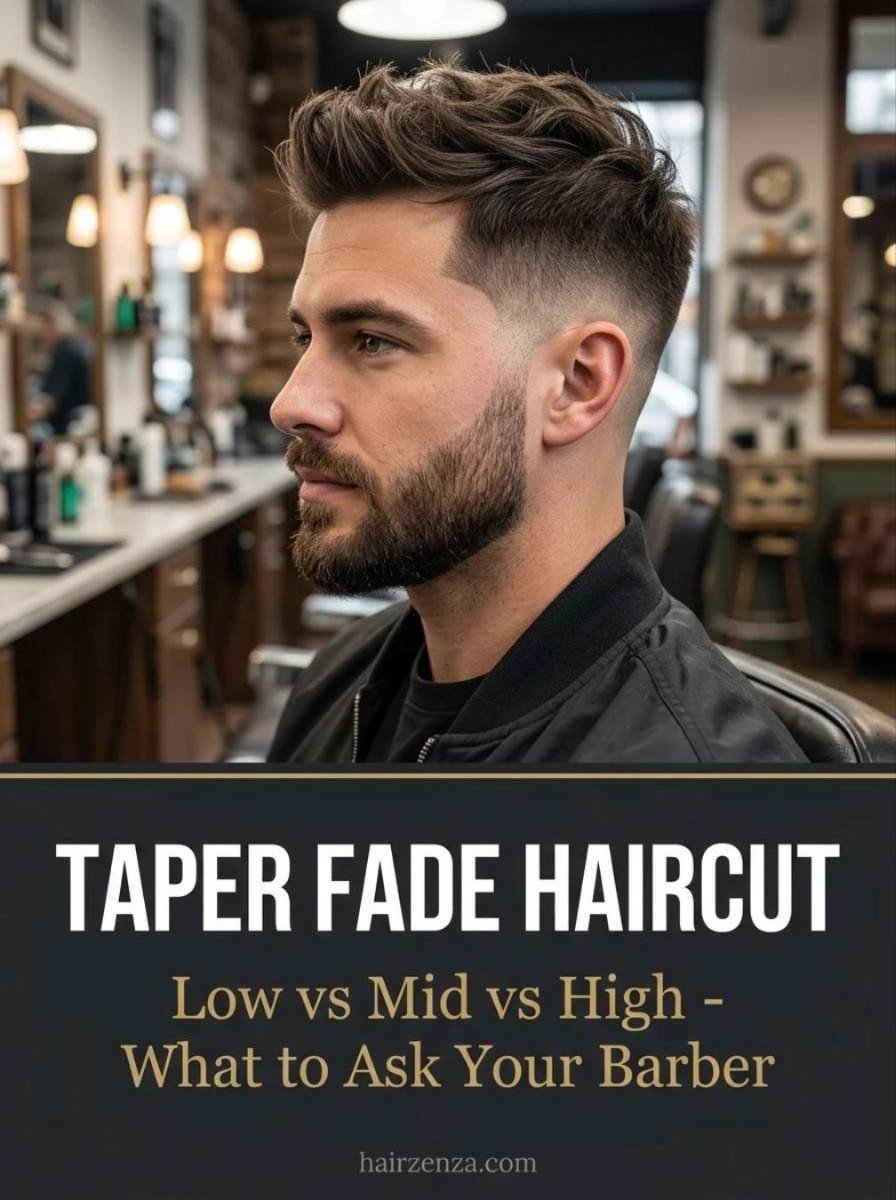

A taper fade haircut is a men’s cut where hair gets gradually shorter at the sideburns and neckline only, while the top and most of the sides stay longer. It’s the cleanest way to look freshly cut without the high-contrast skin look of a full fade.
This taper fade haircut guide gives you what most pages skip: the exact guard numbers to ask for, what it costs, how it grows out week by week, and which version works for your hair type — not just your face shape. It’s written by the Hairzenza team for men who want a cut that looks good on day 1 and still looks good on day 21.
Taper Fade Haircut: Key Takeaways
- What it is: short at the sideburns and neckline only, longer everywhere else.
- Low taper = subtle and office-safe; mid taper = most versatile; high taper = boldest contrast.
- Cost: about $28–$40 at a mid-range US barbershop in 2026.
- Upkeep: sharp for ~2 weeks, tidy for 3–4 weeks.
- Ask for: the taper height, the shortest guard and how much to leave on top.
Table of contents
- What is a taper fade haircut?
- Taper vs fade vs taper fade (glossary)
- Low, mid and high taper fades compared
- Pick your taper in 30 seconds
- What to tell your barber (copy-paste script)
- Best taper fade haircuts for men by top style
- Taper fade by hair type and hair problems
- Who suits a taper fade (work, kids, 40+)
- Cost and time in the chair
- Grow-out timeline and maintenance
- Common taper fade mistakes and how to fix them
- Styling products by top length
- FAQs
What Is a Taper Fade Haircut?
A taper fade shortens hair around the edges — sideburns, around the ears and the nape — and blends it up into longer hair. The rest of the back and sides keep visible length.
The key difference from a regular fade is coverage. Barbers describe it as a cut that only contours the back of the head and sideburns, while a regular fade works all the way around the head.
Why it’s so popular:
- Looks sharp right after the cut but grows out softly
- Works with almost any top: crop, curls, comb over, quiff, mullet
- Office-safe at low height, bold at high height
Taper vs Fade vs Taper Fade: What’s the Difference?
A taper gradually shortens hair and can be done with scissors only. A fade goes much shorter, usually down to skin, with clippers. A taper fade haircut combines both: taper-style coverage (edges only) with fade-style shortness at the very bottom. MasterClass breaks down the main types of tapers if you want to go deeper.
Technically, many barbers say “taper fade” is a slightly redundant phrase (see Art of Manliness on taper vs fade). In practice, it’s the term customers use, so it’s worth knowing what each related name means.
| Term | What it actually means | Shows skin? |
|---|---|---|
| Classic taper | Gradual shortening at the neckline, often scissor-over-comb | No |
| Taper fade | Edges (sideburns + nape) blended down short | Small amount at the very bottom |
| Low fade | Fade all around the head, starting just above the ears | Yes, lower band |
| Skin / bald fade | Fade taken to bare skin with foil shaver or razor | Yes |
| Temple fade (“temp fade”) | Fade only at the temples and sideburns | Small area |
| Burst fade | Fade curves in a half-circle around the ear; back stays longer | Around ear |
| Drop fade | Fade line dips down behind the ear toward the nape | Yes |
| Blowout taper | Low taper with a blown-out, voluminous top and sides | Minimal |
Taper Fade Haircut Types: Low, Mid and High Compared
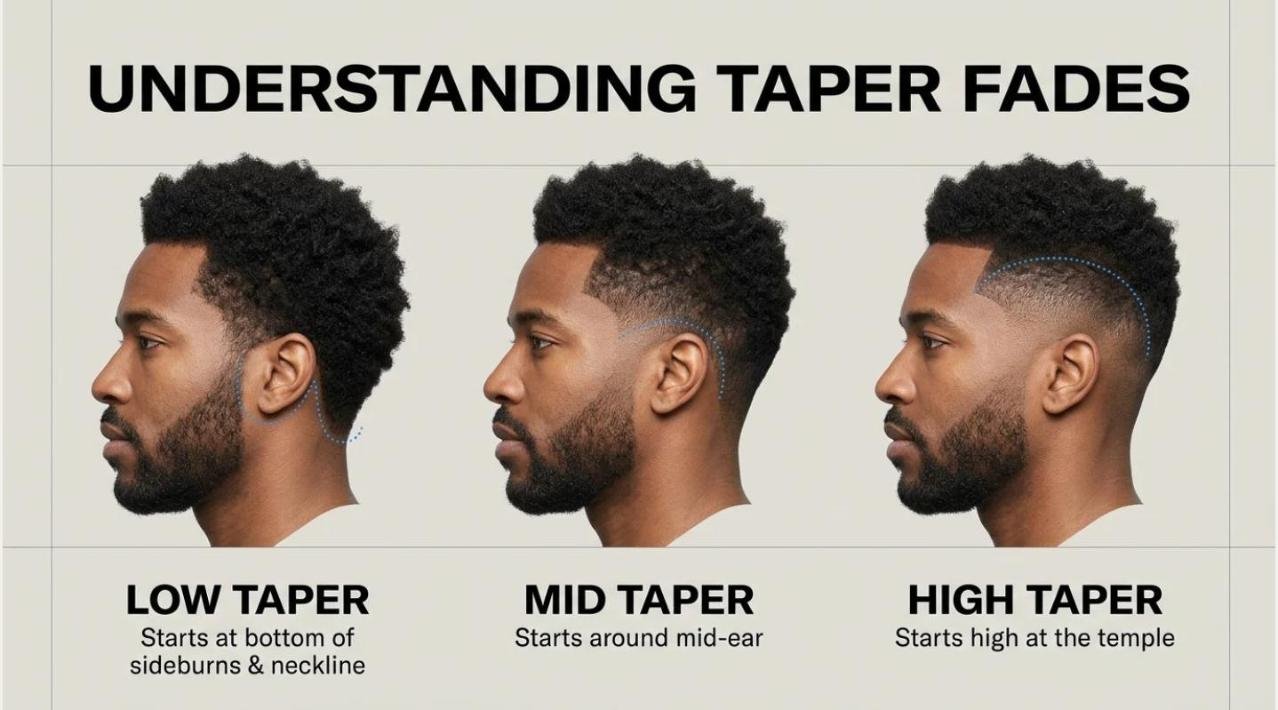
The height where the blend starts changes everything. Low is the safest, mid adds shape, high adds the most contrast.
| Feature | Low taper fade | Mid taper fade | High taper fade |
|---|---|---|---|
| Where the blend starts | Just above the ear / at the neckline | Around the middle of the ear to the temple | Above the temple, near the parietal ridge |
| Contrast | Subtle | Medium | Strong |
| Grow-out | Most forgiving | Noticeable in ~3 weeks | Shows regrowth fastest |
| Best for | Office, first-timers, longer tops | Curly tops, crops, most men | Short tops, high tops, sharp looks |
| Watch out for | Can look “just trimmed” if too soft | Needs a skilled blend | Can exaggerate wide temples or a long face |
Low taper fade
The low taper keeps almost all side length and only cleans the sideburns and nape. It’s the go-to choice if you want to look groomed without anyone noticing a big change. It pairs best with textured crops, side parts and longer flow.
Mid taper fade
The mid taper starts roughly level with the middle of the ear. It gives more shape around the head and is the most popular all-rounder, especially with curly or wavy tops.
High taper fade
The high taper moves the blend up toward the temples for a bold, clean silhouette. It suits short tops, high tops and comb overs, but needs more frequent touch-ups.
Pick Your Taper in 30 Seconds
If you’re unsure, use this. It’s based on the three things that matter most: your job, your top length and how often you’ll visit the barber.
| Your situation | Get this |
|---|---|
| Conservative office, haircut every 4+ weeks | Low taper (no skin) |
| First time trying a fade | Low taper fade |
| Curly or coily top, want shape | Mid taper fade |
| Short top (crop, buzz, high top) | High or mid taper fade |
| Thinning on top | Low or mid taper, keep sides a bit fuller |
| Wide temples or receding corners | Low taper, avoid high temple work |
| Visit the barber every 2 weeks, want maximum sharpness | High taper skin fade |
What to Tell Your Barber (Copy-Paste Script)
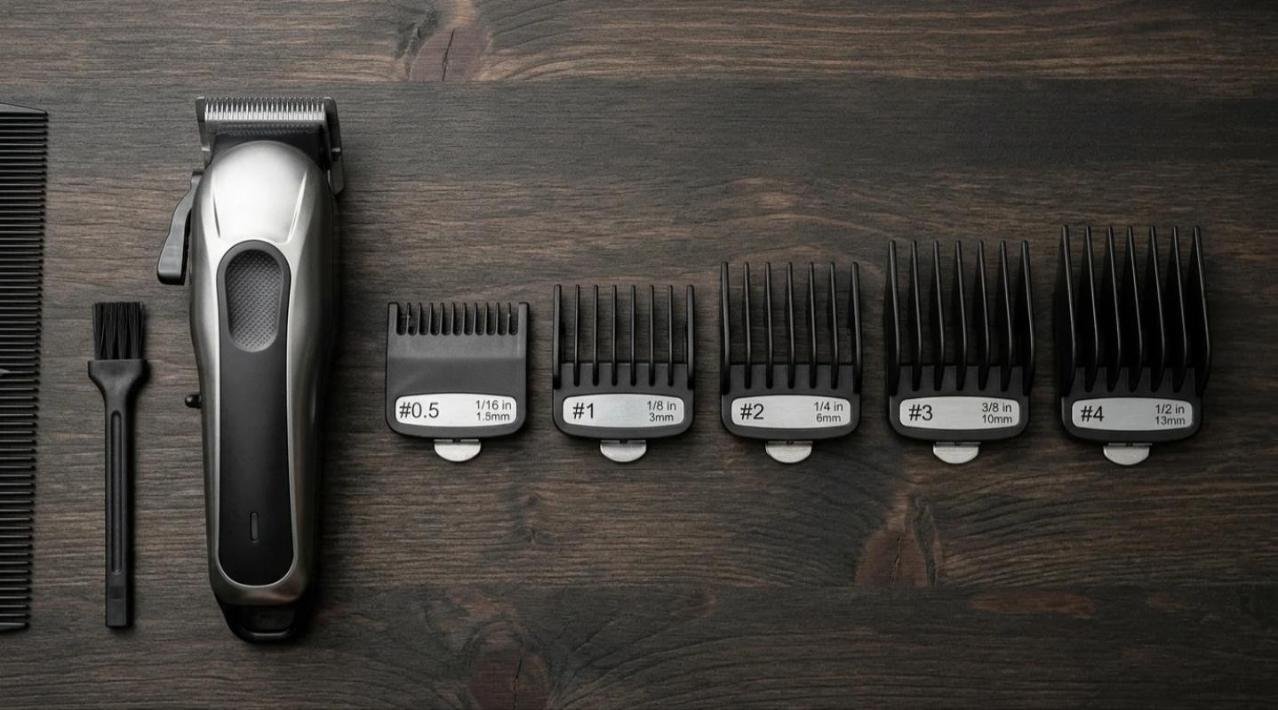
The best way to get the cut you want: name the height, the shortest guard, and the top length, then show a side and back photo.
Clipper guard reference: #0 = no guard (about 1/16″), #1 = 1/8″, #2 = 1/4″, #3 = 3/8″, #4 = 1/2″.
| Style | Say this to your barber |
|---|---|
| Low taper (no skin) | “Low taper at the sideburns and neckline only, down to a #1. Keep the sides at a #3 and natural at the back. Leave 2–3 inches on top.” |
| Low taper fade | “Low taper fade at the sideburns and nape, down to skin at the very bottom, blended to a #3. Clean line-up, top left long enough to style.” |
| Mid taper fade | “Mid taper starting at the middle of the ear, from a #0.5 up to a #3, sides blended smooth. Texture the top.” |
| High taper fade | “High taper starting at the temple, skin at the bottom blending into a #2. Sharp line-up, short textured top.” |
| Burst taper | “Burst fade around the ear, keep the back long, blend into the top.” |
Also tell them:
- Natural or squared neckline (natural grows out cleaner)
- Line-up or no line-up (a hard line-up looks sharp for days, then shows regrowth fast)
- How often you’ll come back — a good barber will place the fade to match
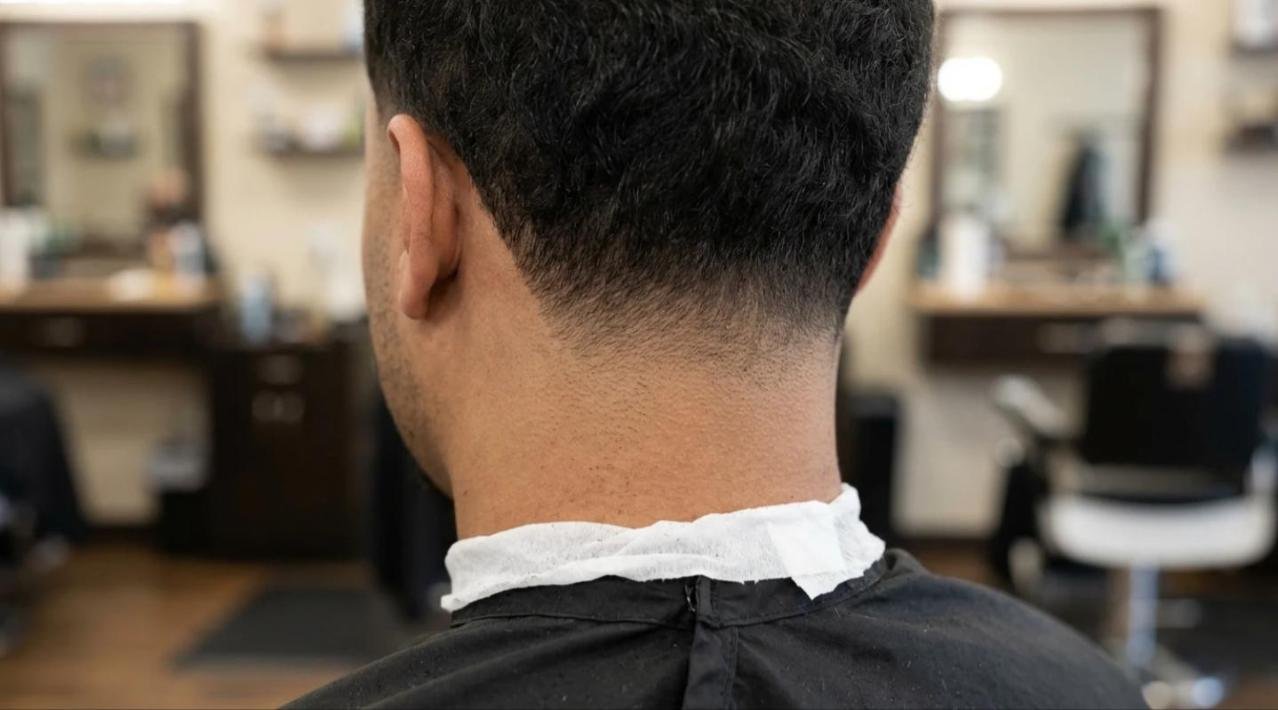
Pro tip: Bring a side and back photo. Most bad tapers happen around the ear and neckline, not on top.
How a Barber Cuts a Taper Fade Haircut, Step by Step
Knowing the steps helps you spot a rushed job and explain what you want. A good taper fade haircut takes 30–45 minutes and follows roughly this order:
- Cut the top first with scissors or clippers so the barber knows how much length the taper has to blend into.
- Set the guide line at the chosen height (low, mid or high) with a longer guard, usually a #2 or #3.
- Take the bottom down shortest — a #0, #0.5 or foil shaver for skin — only at the sideburns and nape.
- Blend the middle zone with half guards and the clipper lever, flicking out and up to erase any lines.
- Refine with clipper-over-comb or scissor-over-comb where the taper meets the longer sides.
- Detail the edges: natural or squared neckline, optional line-up, and a clean edge around the ears.
- Check both sides in the mirror and style the top so you see the finished shape before you leave.
If your barber skips the blending step or rushes the neckline, that is usually where a visible line appears a week later.
Best Taper Fade Haircuts for Men by Top Style
The taper sets the frame; the top sets the style. Here are the taper fade haircut men ask for most, and why each combination works.
| Top style | Best taper height | Why it works |
|---|---|---|
| Textured crop / French crop | Mid or high | Short, forward top needs contrast to look intentional |
| Curly top | Low or mid | Keeps curls the focus while cleaning edges |
| Comb over / side part | Low or mid | Clean, professional, office-friendly |
| Quiff / pompadour | Mid | Height on top balances clean sides |
| Blowout taper | Low | Volume stays on the sides, only edges cleaned |
| Modern mullet | Mid (burst) | Keeps length at the back while sides stay neat |
| Locs / twists | Low or temple taper | Frames the face without touching length |
| Buzz cut | Low skin taper | Adds detail to a simple cut |
| Long hair (shoulder length) | Low taper at nape only | Clean neckline without losing length |
Taper Fade Haircut by Hair Type and Hair Problems
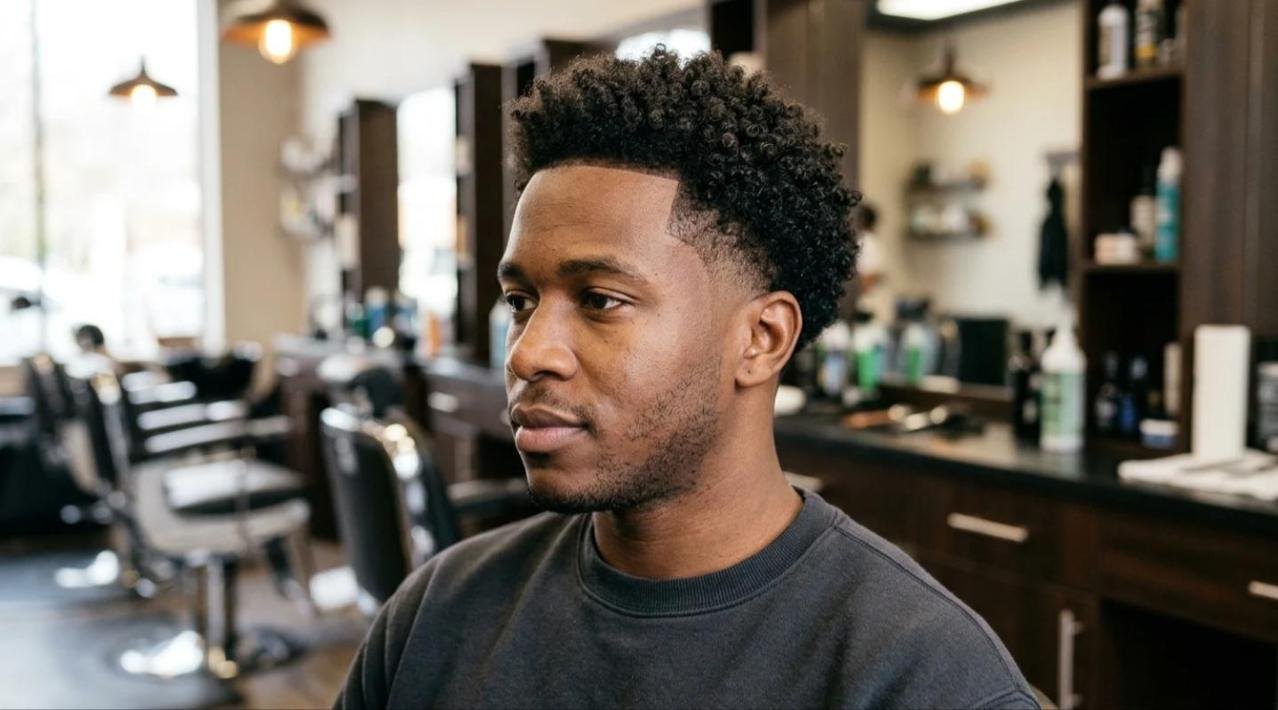
Most guides only talk about face shape. Hair texture and density matter just as much, because they decide how a taper fade haircut looks after a week.
| Hair type / issue | Recommendation | Why |
|---|---|---|
| Coily / type 4 hair | Any height; skin tapers look very crisp | Dense texture blends smoothly and holds line-ups well |
| Wavy / curly | Low or mid taper | Keeps curls balanced with the sides |
| Straight, thick hair (common in East Asian hair) | Mid taper, avoid too short at sides | Straight hair can stick out as it grows; slightly longer sides lie flatter |
| Fine or thin hair | Low taper, no harsh skin band | Strong contrast makes the top look thinner |
| Receding hairline | Low taper, keep temples soft | High temple work exposes the recession |
| Cowlick at the crown or nape | Taper slightly longer at that spot | Too short makes the cowlick stand out |
| Grey or light hair | Mid or high taper | Low-contrast hair needs more height to show the fade |
Who Suits a Taper Fade? (Work, Kids and Men 40+)
Almost everyone, which is why it’s a barbershop default. The question is how high and how short, not whether you can wear it.
- Office and corporate: low taper without skin passes any dress code. Keep the line-up natural.
- Kids and teens: a low or mid taper is practical — it keeps hair off the ears and grows out tidy for school. Avoid razor line-ups on young skin.
- Men 40+: a low taper with a natural neckline looks polished and age-appropriate. It also works well with greying sides.
- Bearded men: ask for the taper to blend into the beard at the sideburns so there’s no hard gap.
How Much Does a Taper Fade Haircut Cost?
In the US in 2026, a taper fade usually costs about $28–$40 at a mid-range barbershop. Budget shops can charge around $18–$25, while premium shops in big cities often charge $45–$65 or more.
| Shop type | Typical taper fade price (US, 2026) | Time in chair |
|---|---|---|
| Budget / chain | $18–$25 | 20–30 min |
| Mid-range barbershop | $28–$40 | 30–45 min |
| Premium / big-city | $45–$65+ | 45–60 min |
What pushes the price up: skin-level blending, razor line-up, a scissor cut on top, a hot towel finish, and the barber’s reputation. Skin fades and taper fades usually cost more than a basic trim because they take more skill and time.
Budget tip: book a neckline and line-up touch-up between full cuts. Many shops offer it for much less than a full cut.
Taper Fade Haircut Grow-Out Timeline and Maintenance
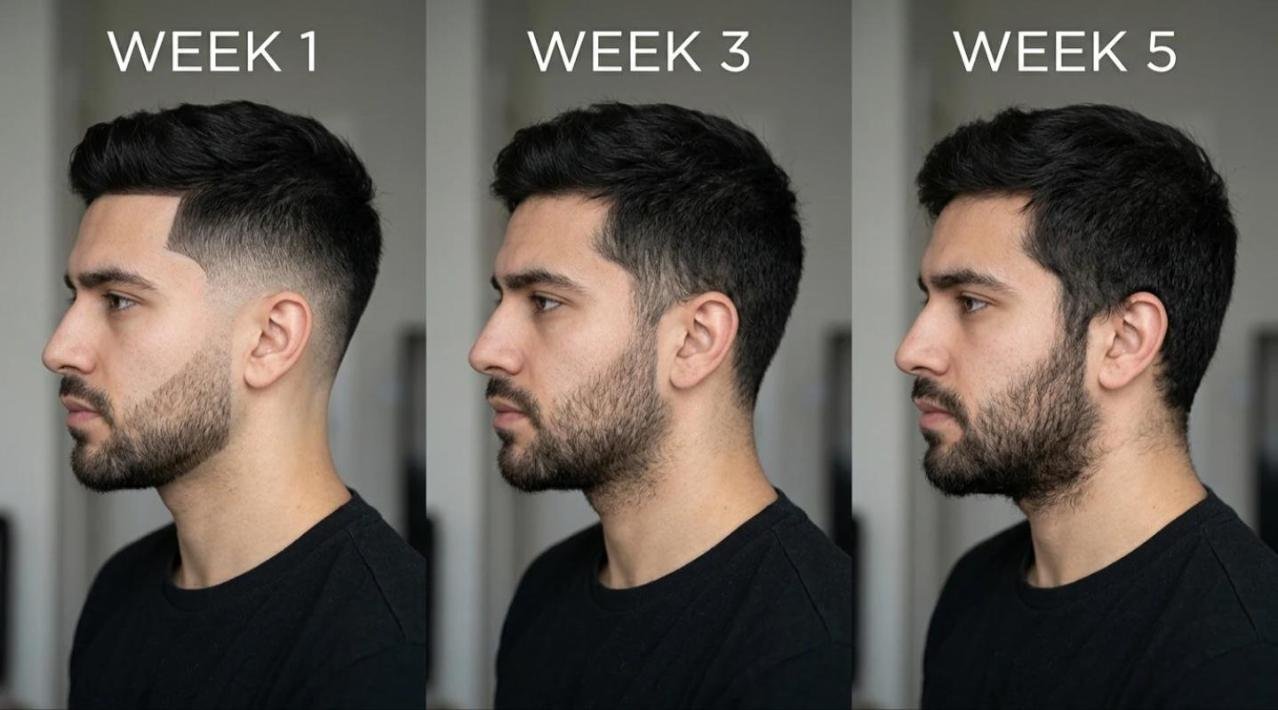
A taper fade haircut looks sharp for about 2 weeks and acceptable for 3–4 weeks. Tapers grow out more gracefully than full fades, which usually need a visit every 2–3 weeks.
| Time after cut | What you’ll see | Action |
|---|---|---|
| Days 1–7 | Crisp line-up, clean skin at the edges | Nothing — enjoy it |
| Week 2 | Line-up softens, light stubble at the nape | Optional neckline clean-up |
| Week 3 | Blend starts losing contrast, sideburns look fuller | High tapers: book now |
| Week 4 | Edges look grown, top may feel heavy | Low/mid tapers: book now |
| Week 5+ | Looks like a regular short-back-and-sides | Full cut needed |
Keep it fresh longer:
- Choose a natural (tapered) neckline instead of a blocked one
- Skip the hard line-up if you can’t visit often
- Pick a low taper if your budget allows only monthly cuts
Common Taper Fade Haircut Mistakes (and How to Fix Them)
Most bad taper fade haircuts come down to height, guard choice or communication — and most can be fixed in one visit.
| Mistake | What it looks like | Fix |
|---|---|---|
| Visible line / step in the blend | Hard band of colour change | Barber re-blends with a half guard (e.g. #1.5) or clipper-over-comb |
| Taper placed too high | Looks like a high fade you didn’t want | Let it grow 1–2 weeks, then re-place the blend lower |
| Uneven sides | One side starts higher | Ask the barber to match to the lower side |
| Neckline pushed too high | Back looks short and boxy | Grow out 2 weeks, then switch to a natural tapered neckline |
| Line-up pushed back too far | Hairline looks receded | Grow it out; ask for “follow my natural hairline” next time |
| Top too short for the taper | Looks like a buzz with no shape | Keep at least 2 inches on top for low/mid tapers |
Can you do a taper fade at home?
You can clean up a neckline at home with a trimmer, but a full taper fade is hard to self-cut because you can’t see the back. If you try, go longer than you think (start with a #2), work upward in small steps, and leave the line-up to a barber.
Best Products to Style a Taper Fade Haircut
The taper needs no product; the top does. Match the product to the length and finish you want.
| Top length / style | Product | Finish |
|---|---|---|
| Short textured crop | Matte clay or paste | Matte, natural |
| Curly / coily top | Curl cream or leave-in + light gel | Defined, soft |
| Comb over / side part | Pomade (water-based) | Medium shine |
| Quiff / blowout | Pre-styler + blow dryer, then light clay | Volume |
| Waves / short coily | Wave brush + light pomade, durag overnight | Smooth, defined |
Taper Fade Haircut FAQs
What is a taper fade haircut?
A taper fade is a men’s haircut where hair is gradually shortened only at the sideburns and neckline, often down to skin at the very bottom, while the top and most of the sides stay longer. It’s cleaner than a classic taper but softer than a full fade.
What’s the difference between a taper and a fade?
A taper gradually shortens hair and can stay fairly long, often cut with scissors. A fade goes much shorter, usually to skin, and covers the sides and back all around the head. A taper fade uses fade-level shortness only at the edges.
Is a low taper or mid taper better?
A low taper is better if you want a subtle, office-friendly look and fewer barber visits. A mid taper is better if you want more shape and contrast, especially with a curly or textured top. If unsure, start low — you can always go higher next time.
How long does a taper fade haircut last?
A taper fade haircut looks sharp for about two weeks and tidy for three to four weeks. High tapers and skin tapers show regrowth faster, so they need a visit every two to three weeks. Low tapers with a natural neckline last the longest.
How much is a taper fade haircut?
In the US, a taper fade haircut usually costs $28–$40 at a mid-range barbershop in 2026. Budget shops may charge less, and premium city shops often charge $45–$65 or more. Razor line-ups, scissor work on top and hot towels add to the price.
Can I get a taper fade with thin hair?
Yes. Ask for a low taper without a harsh skin band, and keep the sides slightly fuller. Strong contrast between bare skin and a thin top makes the top look thinner, so a softer blend is more flattering.
Does a taper fade suit a receding hairline?
Yes, if you keep it low. Ask the barber to keep the temples soft and follow your natural hairline in the line-up. High tapers and sharp pushed-back line-ups draw attention to the recession.
Is a taper fade professional for work?
A low taper fade, or a low taper without skin, is professional in almost any workplace. It looks neat and grows out softly. Save high skin tapers and designs for casual or creative workplaces.
Conclusion: Which Taper Fade Haircut Should You Get?
If you remember one thing: low taper for subtle and low-maintenance, mid taper for shape, high taper for maximum contrast. Then match your taper fade haircut to your hair type and how often you can visit your barber.
Take the script from the barber section, bring a side and back photo, and say how often you’ll come back. That alone prevents most bad taper fades.
Want more cuts like this? Browse the latest men’s haircut guides on the Hairzenza blog, or explore our haircut ideas for men to find your next style.
Save This Taper Fade Haircut Guide for Later
Pin this image to your hairstyle board so you have the cheat sheet ready at your next barber visit.