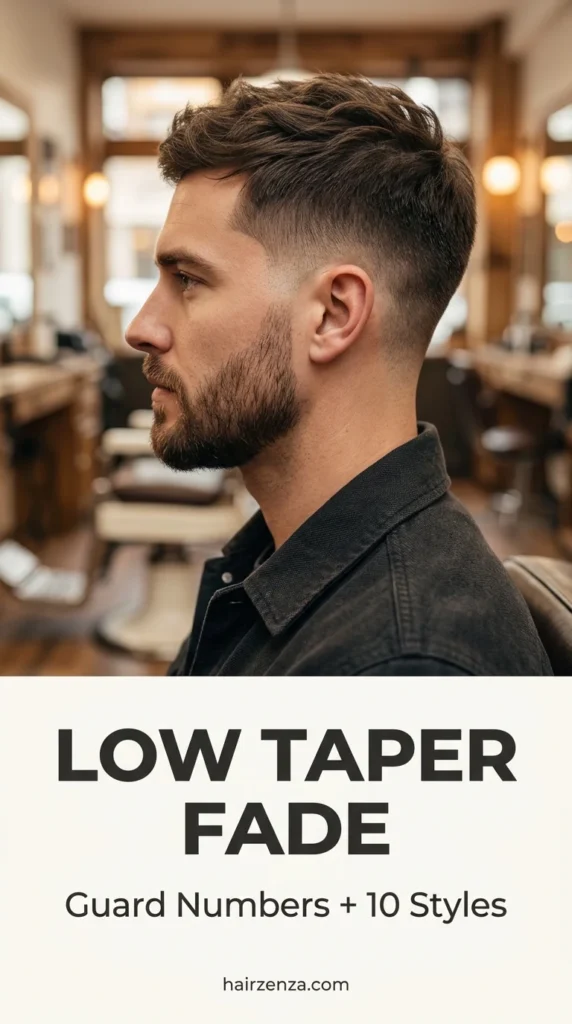
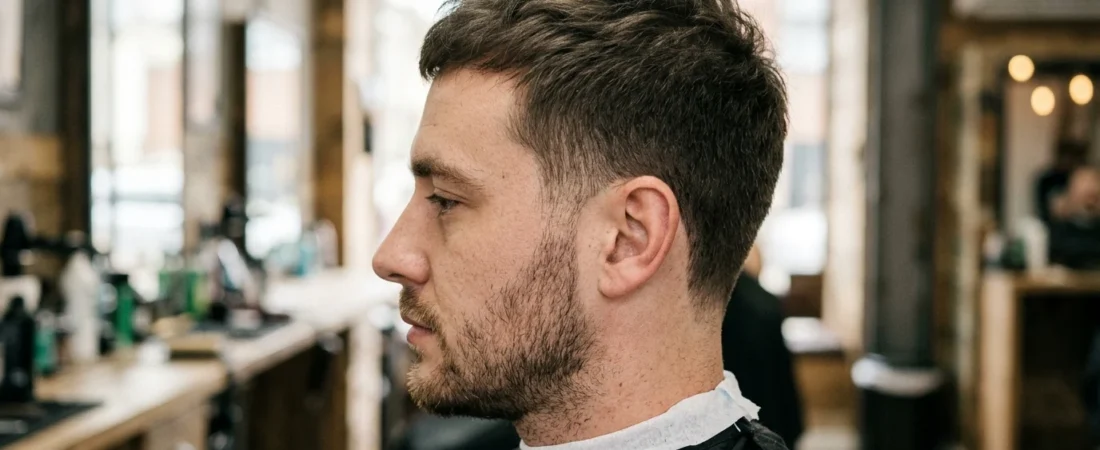
A low taper fade is a men’s haircut where the hair gets shorter only at the sideburns and the nape of the neck, starting just above the ear. Everything else stays at full length. It’s the most low-risk fade you can ask for: clean enough for an office, subtle enough that it grows out without looking messy.
This guide covers what the low taper fade haircut actually is, how it differs from a low fade, the exact guard numbers to ask for, which hair types and face shapes it suits, and how it looks in week 1 versus week 4.
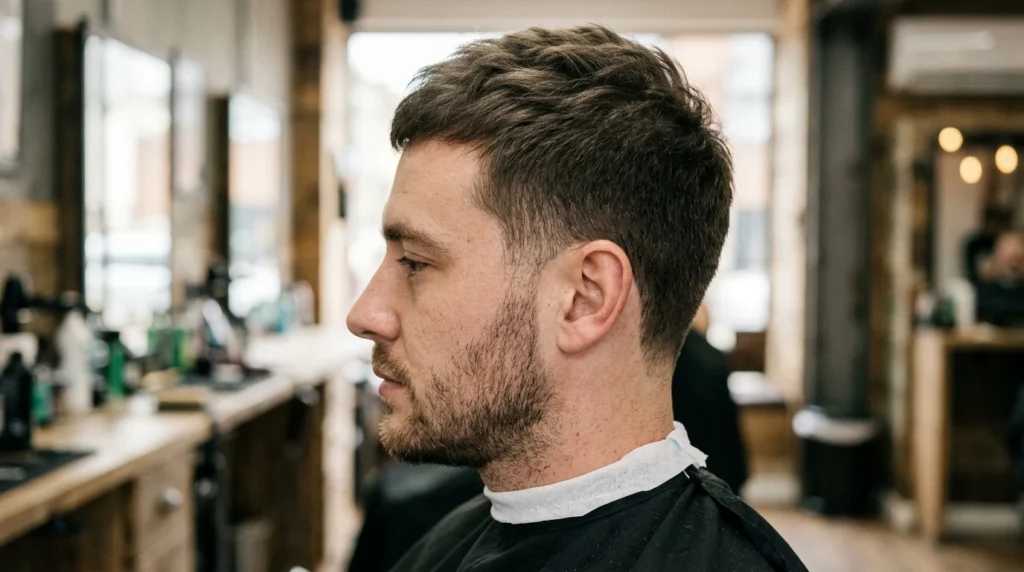
Table of Contents
What Is a Low Taper Fade?
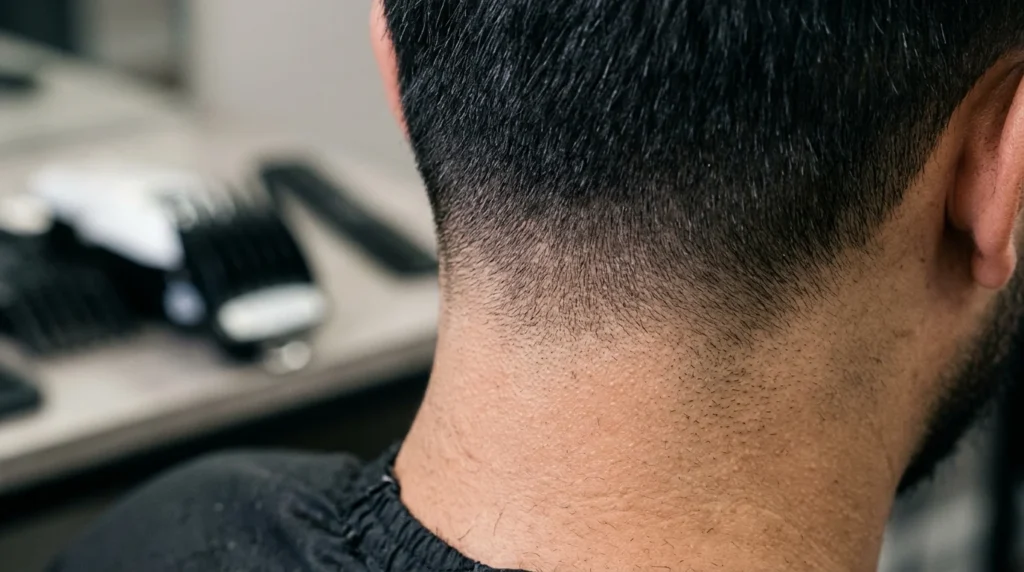
A low taper fade shortens the hair in two small zones: around the ear and sideburn, and along the neckline at the back. The blend starts about half an inch to one inch above the ear and stays below the temple. The upper sides, back and top keep their length.
Think of it as a clean “frame” around the haircut rather than a change to the haircut itself. That’s why barbers call it universal: you can add it to a crew cut, a quiff, curls, twists or a long textured crop.
Three features define it:
- Height: the shortest point sits low, at or just above the natural hairline.
- Area: only the sideburns and nape are faded, not the full side of the head.
- Shortest length: usually a #0.5 to #1 guard, or skin at the very edge for a “skin taper.”
Low Taper Fade vs Low Fade vs Taper
A low taper fades only the edges (sideburns and nape). A low fade wraps the whole way around the head at the same low height, so you see a full band of short hair from ear to ear. A plain taper is even softer and often stays longer than a fade at its shortest point. Barbers themselves draw the same line between the two cuts, as this taper vs fade explainer from Modern Barber shows.
| Cut | What gets short | Contrast | Grows out | Rebook every |
|---|---|---|---|---|
| Classic taper | Neckline + sideburns, longer guards | Very low | Very evenly | 4–6 weeks |
| Low taper fade | Sideburns + nape, down to #0.5 or skin | Low to medium | Evenly | 2–4 weeks |
| Low fade | A full band around the head, low | Medium to high | Shows a line by week 2–3 | 2–3 weeks |
| Mid taper fade | Edges, blend starts near top of ear | Medium | Fairly evenly | 2–3 weeks |
| High taper fade | Edges, blend reaches the temple | High | Fast | 1–2 weeks |
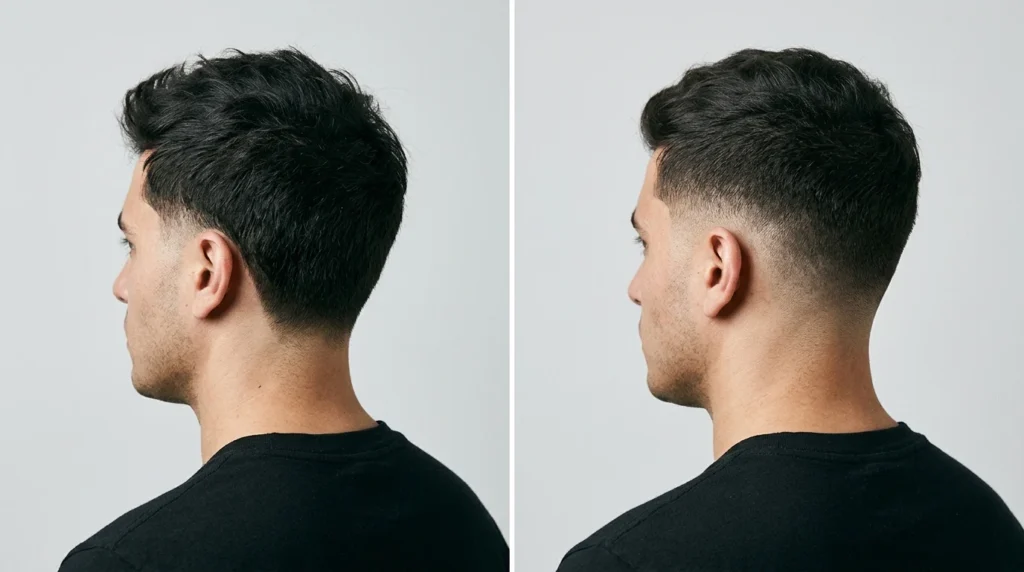
What do “low fade taper”, “taper fade low” and “low low taper fade” mean?
People type the same cut in different word orders. Here’s how barbers read them:
| What you search or say | What a barber hears |
|---|---|
| Low taper fade / low taper fades | The standard cut in this guide |
| Low fade taper / taper fade low / taper low fade haircut | Same cut, different word order. Confirm by pointing at your sideburns and nape |
| Low fade haircut taper / low fade taper haircut | Ambiguous: could mean a full low fade. Say “only the edges” to be safe |
| Low low taper fade | An extra-low taper: the blend stays right at the hairline, barely above the ear. The most subtle version |
The rule: words don’t matter as much as where you point. Show the barber the exact spot where you want the shortest hair to stop.
Guard Numbers for a Low Taper Fade
Most low taper fades use three guards: a short one at the edge, a middle one to blend, and the side length above. Clipper brands vary slightly, so treat these as starting points.
| Guard | Length | Where it’s used in a low taper |
|---|---|---|
| No guard / skin | 0–1 mm | Very edge of a skin taper |
| #0.5 | 1/16 in (1.5 mm) | Bottom edge of a classic low taper |
| #1 | 1/8 in (3 mm) | Bottom edge (softer) or first blend step |
| #1.5 | 3/16 in (4.5 mm) | Blend step |
| #2 | 1/4 in (6 mm) | Blend into the sides |
| #3–#4 | 3/8–1/2 in (10–13 mm) | Side length above the taper |
Three ready-made recipes:
| Recipe | Edge | Blend | Sides | Best for |
|---|---|---|---|---|
| Soft (first-timer, office) | #1 | #2 | #3–#4 or scissors | Anyone unsure; grows out invisibly |
| Classic | #0.5 | #1 → #2 | #3 | Most straight and wavy hair |
| Skin taper | Skin / foil shaver | #0.5 → #1 → #2 | #2–#3 | Curly, coily, waves; sharp look |
Tip: if you’ve never had a fade, start with the soft recipe. You can always go shorter next visit; you can’t add hair back.
Who Suits a Low Taper Fade Haircut?
Almost every man suits a low taper fade, because it changes so little of the head shape. Where it really shines: oval, round and square faces, curly or thick hair, and anyone who needs a professional look.
| Your situation | Does a low taper work? | What to adjust |
|---|---|---|
| Oval face | Yes, any version | Nothing; pick by hair type |
| Round face | Yes | Add height on top (quiff, textured crop) to lengthen the face |
| Square face | Yes | Keep it soft at #1 so the jaw stays the focus |
| Long / oblong face | Yes, best choice | Avoid high fades; keep top flatter or with a fringe |
| Triangle / heavy jaw | Yes | Don’t go to skin; leave weight at the sides |
| Straight fine hair | Yes | Use #1 at the edge; skin can look patchy |
| Thick or wavy hair | Yes | Classic recipe; removes bulk over the ears |
| Curly / coily hair | Yes, very popular | Skin taper keeps curls looking defined |
| Receding hairline | Yes | Pair with a textured fringe or short crop |
| Visible scalp scars or bumps at the nape | Yes | Stay at #1 or longer at the edge |
10 Low Taper Fade Styles by Hair Type
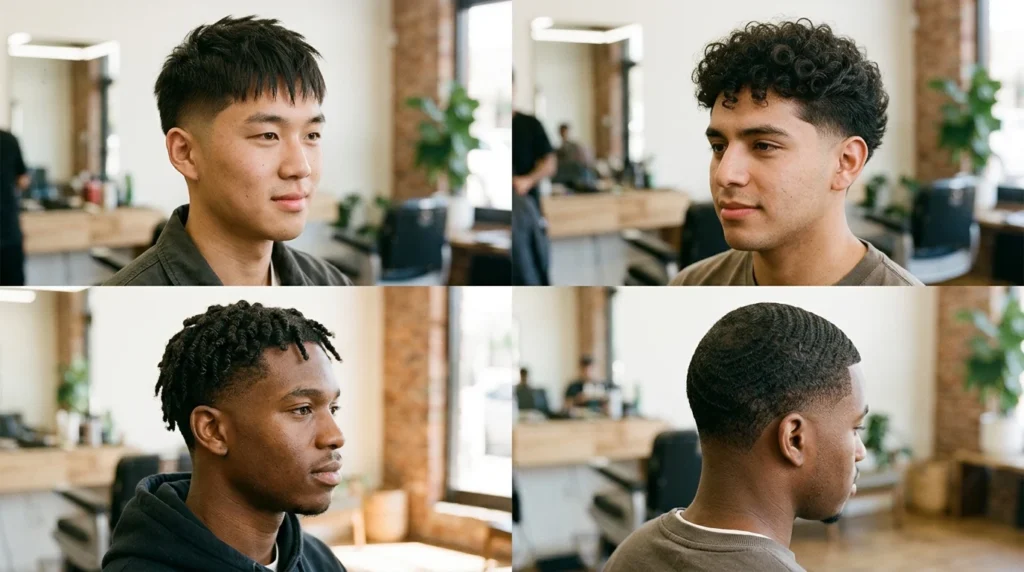
The low taper is the base; the top decides the style. These are the pairings barbers get asked for most.
| Style | Hair type | Top length | Product |
|---|---|---|---|
| Low taper + textured crop | Straight, wavy | 1–2 in, point-cut | Matte clay |
| Low taper + French crop | Straight, thick | 1–2 in, short fringe | Paste |
| Low taper + quiff | Straight, wavy | 3–4 in front | Pre-styler + pomade |
| Low taper + side part | Straight | 2–3 in | Medium-shine pomade |
| Low taper + curly top | Curly | 2–4 in | Curl cream |
| Low taper + twists | Coily (4A–4C) | 2–5 in | Twist butter |
| Low taper + waves | Coily | Short, brushed | Wave pomade + durag |
| Low taper + buzz cut | Any | #2–#4 all over | None |
| Low taper + flow / long hair | Wavy, straight | 5 in+ | Sea salt spray |
| Low taper + mullet | Wavy, curly | Long at back | Texture spray |
How to Ask Your Barber (Copy-Paste Script)
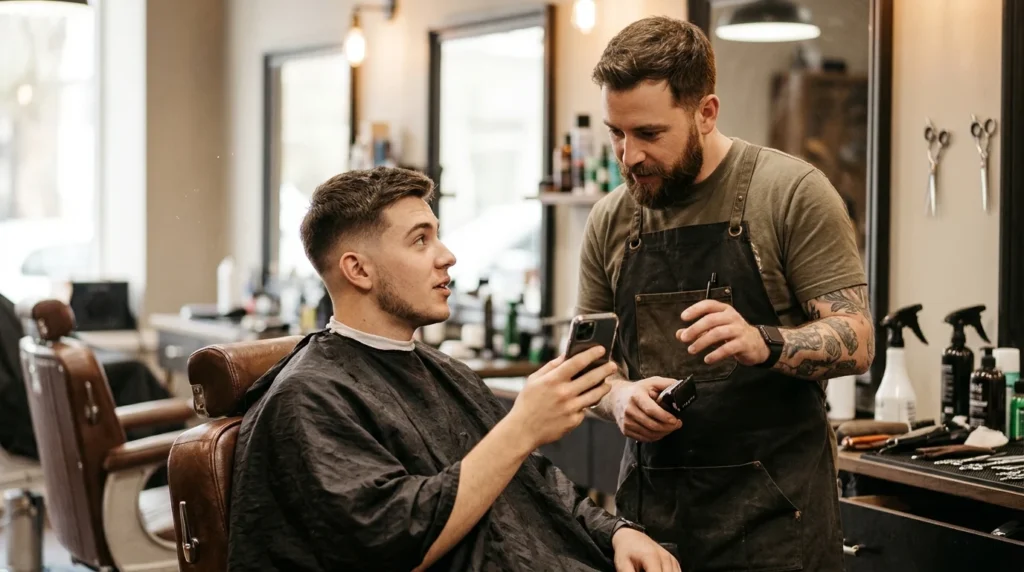
Say three things: where the taper starts, how short the edge goes, and how much length stays on top. Then point at your head and show photos.
Copy-paste script:
“I’d like a low taper fade. Only taper the sideburns and the neckline, not the whole side. Start the blend about half an inch above my ear. Take the edge down to a #0.5 and blend up to a #2, with a #3 on the sides. Leave about two inches on top, textured. Keep the neckline natural, not squared.”
Swap the numbers for your recipe from the guard table above.
Bring three photos:
- A side profile showing the sideburn and ear area.
- A back view showing the nape.
- A front view of the top style you want.
Words worth knowing:
- Neckline: natural (follows your hairline), rounded or squared (blocked). Natural grows out best.
- Line-up / edge-up: a sharp trimmed outline at the forehead and temples.
- Burst: the taper curves around the ear in a half-circle. Ask only if you want that shape.
- Drop: the taper dips lower behind the ear. Also only if you want it.
Grow-Out Timeline and Maintenance
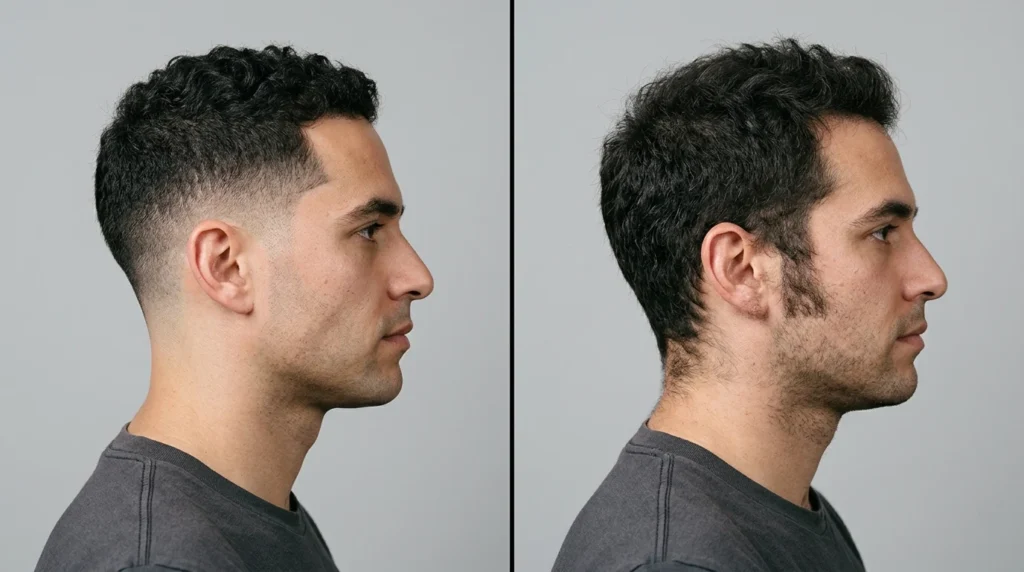
A low taper looks sharp for about two weeks and acceptable for up to four. Hair grows roughly half an inch (about 1.25 cm) a month, so the short edges catch up fast while the top barely changes.
| Time since cut | How it looks | What to do |
|---|---|---|
| Week 1 | Crisp edges, clear blend | Nothing; style as usual |
| Week 2 | Edges soften, neckline fuzz starts | Optional neck clean-up at home |
| Week 3 | Blend mostly gone; looks like a tidy regular cut | Book for skin tapers and curly hair |
| Week 4 | Sideburns and nape look fuller | Book for soft and classic tapers |
| Week 6+ | Taper fully grown out | Barber needs to redo it from scratch |
Cost tip: many barbershops offer a cheaper “taper touch-up” (edges only) between full cuts. Ask; it often costs half of a full haircut.
At-home care:
- Trim only the neckline below the taper with a trimmer, using a hand mirror. Don’t touch the blend.
- Wash 2–3 times a week; daily shampoo dries out the short edges and the scalp shows flakes.
- Moisturise the nape if you get razor bumps after a skin taper.
Common Mistakes (and How to Fix Them)
Most bad low tapers come from two things: the barber went too high, or the blend left a visible line. Both are fixable, but only in one direction: shorter.
| Problem | Why it happens | Fix |
|---|---|---|
| Became a mid fade | Blend started too high, or “low fade” was misheard | Wait 2–3 weeks, then ask for a low taper at the new height. Point at your ear next time |
| Visible line in the blend | Jump of two guard sizes | Ask the barber to blend with a #1.5 or by clipper-over-comb |
| Patchy skin on fine hair | Edge taken to skin | Go #1 at the edge next visit |
| Sides don’t match the back | Sides cut low, nape cut higher (or the reverse) | Ask for the same height on both. Sides and back must match |
| Squared neckline looks bad after a week | Blocked necklines grow out harshly | Choose a natural neckline |
| Bumps or irritation at the nape | Skin taper on sensitive skin | Stay at #0.5; use an unscented aftershave balm |
Special Cases
Thinning or receding hair: a low taper is better than a high fade, because high fades make the top look sparser by contrast. Keep the top short and textured with a fringe.
Beards: ask the barber to blend the sideburn into the beard instead of cutting it to skin. A skin taper with a full beard leaves a bald gap at the cheek that looks unfinished.
Glasses: a low taper keeps hair over the ear just short enough that frame arms don’t push it out. Tell your barber you wear glasses so they clean around the ear carefully.
Office, school and uniform rules: the soft recipe (#1 edge) passes almost any dress code. Avoid skin tapers and hair designs if your school or job is strict.
Kids and teens: the soft low taper is the most requested kids’ fade because it looks neat for longer. Use #1 or #1.5 at the edge for young children, since skin tapers can irritate a child’s neck.
Why Everyone Online Says “Low Taper Fade”
Part of the search interest in “low taper fade” comes from a meme, not the barbershop. It began with a parody song by ericdoa, “Imagine If Ninja Got a Low Taper Fade,” about the Fortnite streamer Ninja (Know Your Meme). Ninja then actually got the cut, and from February 2024 artists started redrawing cartoon and anime characters with low taper fades (Know Your Meme).
The joke kept going as “the low taper meme is still massive,” teasing Ninja for dragging it out. For real life, the takeaway is simple: the meme made the name famous, but the cut itself was already a barbershop staple.
Frequently Asked Questions
What is a low taper fade?
It is a men’s haircut that shortens hair only at the sideburns and the nape, starting just above the ear. The rest of the hair keeps its length. It gives a clean outline without the high contrast of a full fade, so it suits work, school and casual looks.
Is a low taper fade the same as a low fade?
No. A low taper fade only fades the edges: the sideburns and the neckline. A low fade runs in a full band around the head at a low height, so more hair is short and the contrast is stronger. A low fade also needs a barber visit more often, usually every two to three weeks.
What guard number is a low taper fade?
Most of these cuts start with a #0.5 or #1 at the edge, blend through a #1.5 and #2, and keep #3 or #4 on the sides. A skin taper uses no guard at the very edge. First-timers should start at #1 because it grows out more evenly and is easy to take shorter later.
What is a low low taper fade?
It is an extra-low version where the blend sits right at the hairline and barely rises above the ear. It is the most subtle taper you can get. It works well for people who want a tidy look without anyone noticing a fade.
How long does a low taper fade last?
It looks sharp for about two weeks and tidy for up to four. Skin tapers and curly hair need a touch-up around week three. Soft tapers with a #1 edge can stretch to four or even five weeks.
Does a low taper fade suit a round face?
Yes. Pair the low taper with height on top, such as a quiff or textured crop, to make the face look longer. Avoid a flat, heavy fringe, which makes a round face look wider.
Can you do a low taper fade at home?
You can, but it is hard to blend the back without a second mirror or a helper. A safer home routine is to let a barber cut the taper, then clean only the neckline below it with a trimmer between visits.
Conclusion: Is the Low Taper Fade Right for You?
The low taper fade is popular because it is the safest fade there is: sharp edges, natural shape, easy grow-out. Pick your recipe (soft, classic or skin), choose a top style that fits your hair type, and give your barber the three-photo script. Rebook in two to four weeks.
Want more ideas before your next appointment? Browse our men’s haircut guides, read who writes Hairzenza, or send us your low taper question and we’ll help you pick the right recipe.